Tuesday, May 29, 2012

They Know Me on Sight

I walked toward the hematology desk at Mayo Clinic and was greeted by name before I got there. No one wants to be that familiar at that desk, though of course it's a compliment to the sweet technician who remembered me. Imagine how many people she sees in a day, not to mention a month. Good news again today, though, at the end of the 55th 28-day cycle on the pomalidomide study, my numbers are stable once more.  I'm going to write a country-western song about pomalidomide .. my secret love, takin' me to bed every night, keepin' me alive ...

Cancer markers:

IgG is down about 6%, from 1210 to 1140 mg/dL, but it goes up and down a bit, and the difference may be within the measurement accuracy of the test. M-spike is unchanged at 1.1 g/dL. Lambda and kappa light chains both dropped slightly, though the ratio is about the same and I don't really know what the light chains mean anyway.

For the second straight month every other blood marker of any significance was within the reference range, even the red blood cell count. I feel very good, too, and I'm running well, considering recent surgery. I had been concerned about calcium, but it's been well within the reference range for three months now, so I'm sure I have no dissolving bones.

ASCO:

The annual meeting of the Americal Society of Clinical Oncology (ASCO) will be held in Chicago this coming weekend, and my sweeties and I have been invited to attend. We will be helping to staff an advocacy booth supported by the International Myeloma Foundation, and blogging about new myeloma research. We might even go for a nice run on the Chicago Lakeshore Trail.

Advocacy Issues:
  • Early Access to Emerging Treatments: Current rules often prevent doctors and their patients from trying new treatments, even if the patient is dying. We as a nation want to prevent patients from suffering unexpected side effects, of course, but for dying patients the side effect of NO treatment is worse.
  • Oral Drug Parity: Some expensive, targeted cancer treatments are administered as infusions in a clinic, while others are pills, taken at home. Because prescription drug coverage almost always has a much higher co-pay and deductible than the medical insurance that covers in-clinic infusions, patients whose best treatment option is a pill can be faced with bills as high as $10,000 per month. Some states have passed legislation requiring insurers to cover oral treatments on terms no less favorable than in-clinic treatments, and federal legislation is proposed.  It can't come soon enough.
More to come ...

Most-Recent Test Results:

Test    Mar 08    Apr 04    May 04    May 29     Remarks
M-spike g/dL 1.0 1.1 1.1 1.1 \ Tumor marker
IgG mg/dL 1100 1290 1210 1140 / Tumor marker
Lambda mg/dL 2.80 2.24 2.75 2.53 L Free light chains
Calcium mg/dL 10.3 9.6 10.0 9.7 OK
Creatinine mg/dL 1.0 1.2 1.0 1.2 Kidney, OK
HGB g/dL 14.2 14.6 15.6 15.7 Hemoglobin, OK
RBC M/uL 3.86 4.08 4.31 4.37 Red cells, not bad
WBC K/uL 3.7 6.1 5.3 4.6 White cells, OK  
ANC K/uL 1.70 1.50 2.70 1.80 Neutrophils, OK

Related Links:

My Myeloma     A discussion of my myeloma, not very technical.
My Treatment History Not technical.
My Test Charts Graphic displays of several key test results over time.
My Test Result Table Somewhat technical. Best with a wide browser window.
My Supplement Regimen With links to where I buy them.

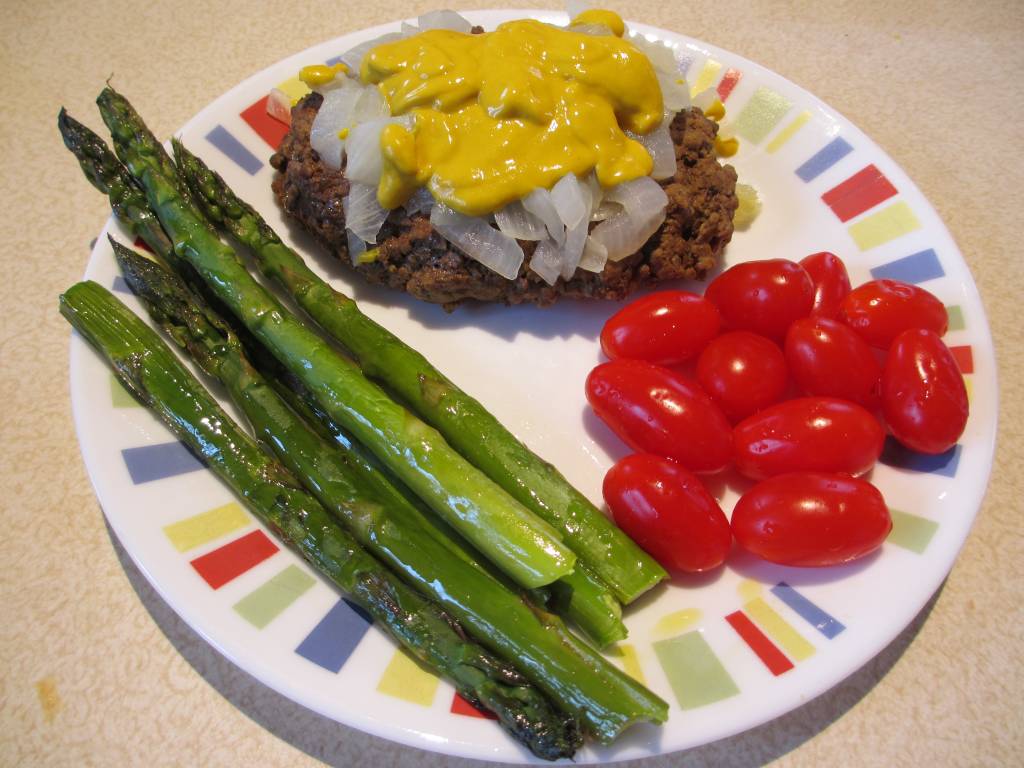
Everything here is organic except the oatmeal in the meat loaf (we don't know where to get oatmeal that is both organic and gluten free). Yes that's a dill pickle in a sweet potato:

Saturday, May 12, 2012

Revlimid and Second Primary Cancers

Newly-diagnosed patients:

Last Monday, May 7, 2012, the FDA issued a Drug Safety Communication which says, in part, "in clinical trials of patients newly diagnosed with multiple myeloma, those patients treated with Revlimid had an increased risk of developing new cancers." These are also called "second primary cancers."

If you are considering Revlimid as initial treatment or as a maintenance treatment, you may wish to read on before you lean very heavily on that FDA statement:
  • The FDA statement contains no new information. The facts on which the statement is based are from three well-known studies on newly-diagnosed patients, and are over a year old. If your doctor doesn't already know of these studies, it's time to get a new doctor.

  • Since one year ago, new information about those studies has been made available, and it is not clear to me that the FDA used that information.

  • The three studies are all different, with somewhat different objectives, and none was specifically designed to reveal the frequency of second primary cancers. They were meant to show the difference in progression-free survival and overall survival, comparing Revlimid maintenance with a placebo, after transplant or other initial treatment.  The Myeloma Beacon has a good description of the three studies.

  • Analysis by FDA and others may be wrong, and this may be one reason:
    • All three studies demonstrated that Revlimid maintenance does extend the time to relapse.
    • In some cases the patients on maintenance had twice as much time, or even more, before relapse.
    • Therefore, patients on Revlimid maintenance had much more time to develop second cancers before relapse than did patients on the placebo.
    • It appears that some of the studies, if not all three, stopped looking for second primary cancers once a patient had relapsed.
    • Thus, we would expect patients in the Revlimid arm to collect more second primary cancers, just because they had more time to do so.

  • Even if Revlimid treatment did result in more second primary cancers, that risk may be lower than the risks from not taking it.
Patients with relapsed/refractory myeloma:

The FDA also reviewed results from two clinical trials which supported the initial FDA approval of Revlimid. I find their description of the data to be confusing at best, but in the worst interpretation of it, patients on Revlimid with high-dose dexamethasone experienced fewer than four second primary cancers per 100 patients per year.

Bottom line:

I'm not a doctor, but I have opinions anyway, and in my opinion, the FDA Safety Communication should not be an occasion to change any decisions about using Revlimid, which is still one of the best treatment options available. Other very smart doctors are trying to make sense of this issue as we speak, and we should wait until better information is available.

I admit to a little bias on this issue, because: (1) I take pomalidomide continuously. It is a close relative to Revlimid, and I don't want to think about second primary cancers from that; and (2) I like Celgene, the makers of both drugs. However, I really don't think that we have enough information yet to even say for sure that Revlimid poses a greater risk of second primary cancers than no treatment at all.

Please comment, especially if you have any corrections or suggestions about facts or reasoning in this blog post. Please let me know. Thanks.

We Lost Another One

Mike Olson, from Menominee WI, participated regularly in the Stillwater, MN support group meetings, and was instrumental in starting a support group in Eau Claire, WI.  Mike's myeloma was aggressive, however, eventually overwhelming every treatment Mike's doctors could offer.  After a couragous and exhausting battle, Mike died at home Thursday, May 10, 2012.  We will miss him.

Here is the obituary.

Friday, May 4, 2012

Cycle 54, Still Stable

At the end of the 54th 28-day cycle on the pomalidomide study, I'm happy with the results once again. It's good stuff.

Cancer markers:

IgG is down slightly, from 1290 to 1210 mg/dL, but the difference may be within the measurement accuracy of the test. M-spike is unchanged at 1.1 g/dL. Lambda and kappa light chains did their usual dance, this time lambda chains are up slightly, but I doubt it means anything.

Every other blood marker of any significance was within the reference range, even the red blood cell count. I feel very good, too.

Anniversary:

Sunshine and I have recently begun the 50th year of our marriage. We're having a lot of fun running marathons in each of the 50 states, but 49 years of marriage is far more significant and satisfying.

Most-Recent Test Results:

Test    Feb 07    Mar 08    Apr 04    May 04     Remarks
M-spike g/dL 1.1 1.0 1.1 1.1 \ Tumor marker
IgG mg/dL 1280 1100 1290 1210 / Tumor marker
Lambda mg/dL 1.99 2.80 2.24 2.75 L Free light chains
Calcium mg/dL 10.2 10.3 9.6 10.0 Normal
Creatinine mg/dL 1.0 1.0 1.2 1.0 Kidney, OK
HGB g/dL 15.2 14.2 14.6 15.6 Hemoglobin, OK
RBC M/uL 4.18 3.86 4.08 4.31 Red cells, not bad
WBC K/uL 4.5 3.7 6.1 5.3 White cells, normal
ANC K/uL 2.40 1.70 1.50 2.70 Neutrophils, normal

Related Links:

My Myeloma     A discussion of my myeloma, not very technical.
My Treatment History Not technical.
My Test Charts Graphic displays of several key test results over time.
My Test Result Table Somewhat technical. Best with a wide browser window.
My Supplement Regimen With links to where I buy them.

Normal Breakfast:

Monday, April 30, 2012

I Had Fun Today

I had a chance today to address employees of Celgene, makers of pomalidomide, the investigational drug that has kept my myeloma stable for more than four years now.  I'm grateful for the drug, and told them so.  They seemed pleased, and I had a lot of fun.

Celgene recently announced that they have submitted pomalidomide to the FDA for approval, see previous post.  I will be delighted when the drug is accessible to even more people.

Friday, April 27, 2012

Pomalidomide Submitted for FDA Approval

I'm so delighted.  Pomalidomide, by Celgene, is the new, innovative anti-cancer drug which has kept my myeloma stable for four years now, in a drug trial.  That trial and other trials have demonstrated that pomalidomide is a powerful combatant in the fight against myeloma.  When pomalidomide is available to everyone it will benefit many, many patients.  For some, it will save their lives.

If all goes very well, the FDA could approve pomalidomide as soon as this fall.

Here is a great article on Celgene's April 26 announcement, by the International Myeloma Foundation.

The other very promising drug on the immediate horizon is carfilzomib, by Onyx, submitted for FDA approval last September and well on its way to approval.  It uses a different mechanism than pomalidomide for fighting myeloma, and there is even a trial underway to determine how well they might work together.

Things are happening.  Never stop hoping.

Wednesday, April 4, 2012

Another Good Result at Mayo

At the end of the 53rd 28-day cycle on the pomalidomide study, I'm happy with the results once again.

Cancer markers: IgG is up slightly, from 1100 to 1290 mg/dL, but that's where it was in November and February, so it's not scary, and part of the increase may be good IgG responding to the surgery. M-spike came up a bit too, 1.0 to 1.1 g/dL, but that increase was less than the increase in IgG. That's fine. Lambda and kappa light chains did their usual bounce too, this time down, nicely into the reference range.

Neutrophils: These cells are the first responders of the immune system, always on the alert, and they are up 250% from last month. Since there is no evidence of any infection, Dr LH believes that this increase is my body's normal response to the hernia surgery 16 days ago. See Too Late to Back Out Now. Actually, I'm tickled to see that my supposedly-compromised immune system is able to respond that well to a perceived threat.

Calcium: Last month calcium was 10.3 mg/dL, slightly over the top of the range, but today it was 9.6, comfortably below. Dr L said that hydration makes a big difference, and I did make an effort to hydrate properly this time. Now I'm a believer. One happy interpretation of the reduction is that last month's high reading most likely did not come from bone lesions, because those don't stop sending calcium into the blood.

Rash from Bactrim: I mentioned to Dr LH that Bactrim (sulfamethoxazole) caused a rash on my leg. She asked if I had confirmed that by going off until the rash went away, then going back on again. I have not confirmed it, though the time-correlation was too stark for me to doubt. I may get a chance to confirm it sometime in the future, but I'm not going to take Bactrim as a prophylaxis, only if I know of an infection that it might fix.

Most-Recent Test Results:

Test    Jan 12    Feb 07    Mar 08    Apr 04     Remarks
M-spike g/dL 1.2 1.1 1.0 1.1 \ Tumor marker
IgG mg/dL 1190 1280 1100 1290 / Tumor marker
Lambda mg/dL 2.24 1.99 2.80 2.24 L Free light chains
Calcium mg/dL 10.0 10.2 10.3 9.6 High
Creatinine mg/dL 1.0 1.0 1.0 1.2 Kidney, OK
HGB g/dL 15.1 15.2 14.2 14.6 Hemoglobin, OK
RBC M/uL 4.36 4.18 3.86 4.08 Red cells, low
WBC K/uL 4.8 4.5 3.7 6.1 White cells, normal
ANC K/uL 2.40 1.70 1.50 3.80 Neutrophils, way up

Related Links:

My Myeloma     A discussion of my myeloma, not very technical.
My Treatment History Not technical.
My Test Charts Graphic displays of several key test results over time.
My Test Result Table Somewhat technical. Best with a wide browser window.
My Supplement Regimen With links to where I buy them.

Crocuses seem to shout, don't they!

Thursday, March 8, 2012

Celebrating Four Years on Pomalidomide

This month is the fourth anniversary of my start in the pomalidomide study, and today is the end of the 52nd 28-day cycle. The news is pretty good.

Bones: Because calcium has been a little high lately, suggesting a possible bone issue, we did a skeletal survey and a bone density scan today. Quote from bone survey report: "Generalized spotty osteopenia without localized lytic lesions. No change since 3/4/09." That works for me! Although x-ray doesn't always show myeloma lesions, this report means that I probably do not have a bone on the verge of breaking. Furthermore, the bone density measurements were the same as two years ago, within the measurement accuracy of the DEXA system, so my overall bone health is good. That's all good news. I do not take Fosamax, but I do take Vitamin D3 and Vitamin K2 (not Vitamin K).

Cancer markers: IgG dropped significantly, from 1280 to 1100 mg/dL, and M-spike obediently followed, dropping from 1.1 to 1.0 g/dL, where it hasn't been since last September. That's very nice. I doubt it's a trend, but wouldn't that be great? Lambda light chains are up, from 1.99 to 2.80 mg/dL, but kappa chains are up too and anyway I'm not sure that light chains are an important marker in my particular myeloma.

Other: Calcium is still high, at 10.3 mg/dL, but that could be a lingering effect from the marathon last Sunday. Some dehydration happens in a marathon, like it or not, and recovery takes a while. Liver markers are at the top of the reference range, too, but we might attribute that to the marathon as well. Neither is an issue right now. Both the red blood cell count and the white cell count are a bit lower than usual though, and I don't know what to think of that. We'll see what they do next month. Actual counts are shown below.

Doctor L:
  • I pointed to a rash on my leg, suggesting that it might be from the Bactrim DS antibiotic that I've been taking, or perhaps it could be from shingles. She said that it could be the Bactrim, which has a reputation for causing rashes, but that it wasn't shingles. I was taking the Bactrim to deal with an infection in my jaw, a bad tooth, but the tooth is getting better after some dental work and I stopped the Bactrim a few days ago. The rash looks a little better already, but not enough yet to know for sure that Bactrim was the cause.
  • I asked again how long I can remain on the pomalidomide study, and she confirmed that I can probably take it until my myeloma no longer responds to it. She knows of one myemomiac who was in the first Revlimid study and is still on it after eight years.
  • We discussed my sports hernia (abdominal wall strain, athletic pubalgia) and she actually suggested acupuncture. Some of her patients have found great relief from neuropathy through acupuncture, when all else failed. This is about healing, not pain relief, but who knows? I'm actively seeking an acupuncturist - willing to try anything to avoid surgery.

Most-Recent Test Results:

Test    Dec 14    Jan 12    Feb 07    Mar 08     Remarks
M-spike g/dL 1.1 1.2 1.1 1.0 \ Tumor marker
IgG mg/dL 999 1190 1280 1100 / Tumor marker
Lambda mg/dL 3.15 2.24 1.99 2.80 L Free light chains
Calcium mg/dL 10.3 10.0 10.2 10.3 High
Creatinine mg/dL 1.1 1.0 1.0 1.0 Kidney, OK
HGB g/dL 15.1 15.1 15.2 14.2 Hemoglobin, OK
RBC M/uL 4.17 4.36 4.18 3.86 Red cells, low
WBC K/uL 4.8 4.8 4.5 3.7 White cells, low-norm
ANC K/uL 1.90 2.40 1.70 1.50 Neutrophils, low

Related Links:

My Myeloma     A discussion of my myeloma, not very technical.
My Treatment History Not technical.
My Test Charts Graphic displays of several key test results over time.
My Test Result Table Somewhat technical. Best with a wide browser window.
My Supplement Regimen With links to where I buy them.


Two lovely volunteers with the three of us after the B&A Trail Marathon last Sunday:

Thursday, February 9, 2012

Mixed Results

End of the 51st Cycle of Pomalidomide (CC-4047):

As often happens, some of the myeloma blood markers are up this month, some down. M-Spike is down from 1.2 to 1.1 g/dL, but IgG is up from 1190 to 1280 mg/dL. I don't know which to believe, so I'm calling it a draw, meaning "stable" in cancer lingo. For good measure, Lambda light chains are down from 2.24 to 1.99 mg/dL, while Kappa chains went up, making the ratio go up, which in my case is good. I think. Maybe. As Dr L said, "We'll take it."

I take a little capsule containing 2 mg of pomalidomide every night, and every 28 days my family and I drive the 80 miles to Mayo Clinic in Rochester, where I have blood tests and the occasional ECG or X-ray. Next month will mark four full years on the pomalidomide study. I'm a satisfied customer!

Some of the discussion with Dr. L:
  • A previous doc at Mayo had given me a prescription for bactrim, an antibiotic, to be taken daily to ward off a pneumonia which attacks people with compromised immune systems. Dr. L gives the same prescription for people in my situation when dexamethasone (DEX) is part of the regimen, but not otherwise, and I am no longer taking DEX, so she did not renew the prescription. OK, the fewer medications the better.
  • I mentioned to Dr. L that the neuropathy in my fingers is slowly advancing. For example, I recently felt a suspicious blueberry between thumb and forefinger to see if it was soft or firm, but I couldn't tell without picking it up to check it more closely. She asked if I had tried acupuncture, and remarked that a few of her other patients seemed to have some success with it. I might try it, but right now the neuropathy doesn't really affect my quality of life. Yet.
  • Calcium was up again, slightly above the reference level. Dr. L thought it might be due to slight dehydration, especially since my blood draw was at 10 am rather than the usual 6 am and I can't take fluids until the blood draw. I think that's probably right. Anyway I have a skeletal survey and a bone density test scheduled for next month, so if the calcium is an indicator of bone loss, there is a pretty good chance of catching it.
Peripheral Neuropathy (PN):

The International Myeloma Working Group (IMWG) recently issued Guidelines for the Management of Treatment-Emergent Peripheral Neuropathy in Multiple Myeloma. This is a very comprehensive document which I recommend to anyone dealing with neuropathy caused by myeloma treatments. It discusses drugs, supplements, physical therapy, acupuncture, chemotherapy dose modification, and even prevention of PN. It's a guide for both doctors and patients.

If that link doesn't work, use this one, a verbatim copy of just the document on another web site.

Some Recent Test Results:

Test    Nov 17    Dec 14    Jan 12    Feb 07     Remarks
M-spike g/dL 1.1 1.1 1.2 1.1 \ Tumor marker
IgG mg/dL 1280 999 1190 1280 / Tumor marker
Lambda mg/dL 2.12 3.15 2.24 1.99 L Free light chains
Calcium mg/dL 10.3 10.3 10.0 10.2 High
Creatinine mg/dL 1.1 1.1 1.0 1.0 Kidney, OK
HGB g/dL 15.0 15.1 15.1 15.2 Hemoglobin, OK
RBC M/uL 4.18 4.17 4.36 4.18 Red cells, low
WBC K/uL 5.3 4.8 4.8 4.5 White cells, normal
ANC K/uL 1.70 1.90 2.40 1.70 Neutrophils, normal

Related Links:

My Myeloma     A discussion of my myeloma, not very technical.
My Treatment History Not technical.
My Test Charts Graphic displays of several key test results over time.
My Test Result Table Somewhat technical. Best with a wide browser window.
My Supplement Regimen With links to where I buy them.


Oatmeal pancake. Might even be a bit of maple syrup on it:

Saturday, January 14, 2012

Not Boring


Doctor Visit 2012 January 12

End of the 50th Cycle of Pomalidomide (CC-4047):

Stable after 50 full cycles. That sounds really boring, but I'm never bored. Every 28 days I go to Mayo Clinic and have blood drawn. The results show up in a couple of hours, and during all that time I'm a little stressed. Then I obsess about the results: were they down, or were they really up? This time I'm going to write about it, without obsessing, and then forget it until next month.

The two major tumor markers are both up. IgG went up almost 20%, from 999 to 1190 mg/dL, and M-spike rose from 1.1 to 1.2 g/dL. That sounds bad, of course, but both numbers do jump around and IgG is still below other recent values. M-spike is as high as it has been recently, but 1.2 g/dL (1200 mg/dL) is actually an impossible value, because it's higher than IgG, so I won't worry about it. I say the myeloma markers are still stable. Whether it makes any difference or not, lambda light chains are down, kappas are down too, and the ratio is unchanged, so that's probably good.

The best news is that calcium came back down from 10.3 to 10.0 mg/dL, below the top of the reference range. Normal. So there is probably NOT a lesion burning a hole in a bone somewhere. We had scheduled an X-ray bone survey for today, but cancelled it. We'll do it in March as part of the annual bone exam.

Some Recent Test Results:

Test    Oct 19    Nov 17    Dec 14    Jan 12     Remarks
M-spike g/dL 1.1 1.1 1.1 1.2 \ Tumor marker
IgG mg/dL 1310 1280 999 1190 / Tumor marker
Lambda mg/dL 2.75 2.12 3.15 2.24 L Free light chains
Calcium mg/dL 10.0 10.3 10.3 10.0 Normal
Creatinine mg/dL 1.1 1.1 1.1 1.0 Kidney, OK
HGB g/dL 14.6 15.0 15.1 15.1 Hemoglobin, OK
RBC M/uL 4.07 4.18 4.17 4.36 Red cells, normal
WBC K/uL 4.8 5.3 4.8 4.8 White cells, normal
ANC K/uL 2.30 1.70 1.90 2.40 Neutrophils, normal

Related Links:

My Myeloma     A discussion of my myeloma, not very technical.
My Treatment History Not technical.
My Test Charts Graphic displays of several key test results over time.
My Test Result Table Somewhat technical. Best with a wide browser window.
My Supplement Regimen With links to where I buy them.


Lunch salad - there's a bed of romaine under there. Organic beets, organic broccoli, roasted organic sweet potato, and the meat is a little leftover ground beef:

Saturday, December 24, 2011

Still Stable

Doctor Visit December 14, 2011
End of the 49th Cycle on the Pomalidomide Study

The news is pretty good, I'd say, though a little confused. IgG dropped to 999, from 1280 mg/dL last month, a whopping 22%, but M-spike remained the same at 1.1 g/dL. As I understand the relationship between IgG and M-spike, this is an impossibility and represents an error (or a tolerance) in at least one of the two tests. I prefer to believe IgG.

On the other hand, if it matters, Lambda light chains popped up from 2.12 to 3.15 mg/dL, a pretty big jump, and now slightly above the top of the reference range. Kappa light chains went up a similar amount though, so the Kappa/Lambda ratio declined only slightly. I suspect a testing anomaly there, and anyway I'm not sure of the significance of light chains in my case.

The only real concern is calcium, which is 10.3 mg/dL, slightly above the top of the reference range, 10.1. The reason for the slightly high calcium is unclear, and worth investigation, because it could indicate a hot spot in a bone somewhere. Or it could indicate poor hydration, which is also believable. Calcium was high last time too, and Dr LH and I had agreed then that if calcium was high again this time she would schedule a skeletal survey for the next trip. It has been scheduled. Meantime, I have no bone pain anywhere and hope that nothing breaks.

As I write this, we are sitting in Mayo Clinic waiting for the new prescription of pomalidomide, for the 50th cycle of the study. When we have it in hand, we're off cross country to a marathon in Delaware. This may not get posted until we arrive there and have a little time.

Note: In fact, it didn't get posted until we finished the marathon, got back home, and caught up on some other things. Now 61 marathons in 42 states since diagnosis.

MERRY CHRISTMAS!

Some Current Test Results:

Test    Sep 22    Oct 19    Nov 17    Dec 14     Remarks
M-spike g/dL 1.0 1.1 1.1 1.1 \ Tumor marker
IgG mg/dL 1020 1310 1280 999 / Tumor marker
Lambda mg/dL 2.49 2.75 2.12 3.15 L Free light chains
Calcium mg/dL 10.0 10.0 10.3 10.3 High
Creatinine mg/dL 0.9 1.1 1.1 1.1 Kidney, OK
HGB g/dL 14.9 14.6 15.0 15.1 Hemoglobin, OK
RBC M/uL 4.09 4.07 4.18 4.17 Red cells, low
WBC K/uL 6.2 4.8 5.3 4.8 White cells, normal
ANC K/uL 2.60 2.30 1.70 1.90 Neutrophils, normal

Related Links:

My Myeloma     A discussion of my myeloma, not very technical.
My Treatment History Not technical.
My Test Charts Graphic displays of several key test results over time.
My Test Result Table Somewhat technical. Best with a wide browser window.
My Supplement Regimen With links to where I buy them.

Christmas season lunch. All organic:

Tuesday, December 13, 2011

ASH Conference Post # 6 - New Myeloma Therapies

Monday at ASH seems to be the day that most myeloma papers are presented. I spent several hours listening and taking notes.

Dr. Andrzej Jakubowiak

In this study, carfilzomib was combined with Revlimid (Rev) and dexamethasone (dex) for newly-diagnosed patients. Carfilzomib was administered twice weekly, dex decreasing from 40 mg/wk.

After treatment, 100% of patients reached very good partial response (VGPR), which is simply amazing. 79% reached near-complete response (nCR) or better after 12 cycles. Side effects were low. The study is still young, but all patients are still alive. This is a very encouraging study. In the authors' opinion, "These results compare favorably to the best frontline regimens in MM." Who can disagree?

Dr. Paul Richardson

Dr. Richardson pointed out that two previous studies have shown that pomalidomide (pom) is active in patients for whom prior therapies have failed, including both Rev and Velcade. This new study was intended first to find the maximum tolerable dose (MTD), and then to determine progression-free survival (PFS) and overall survival (OS). Patients had lots of prior therapies.

MTD was found to be 4 mg, 3 weeks on, 1 week off.

Pom was studied as a single agent and with dex, and pom/dex was found to be quite superior to Pom alone. To quote my own doctor, "everything works better with dex." PFS was just 4 months for these patients, whose myeloma had become quite resistant prior to this study. OS was short too, but this is no surprise with such heavily pre-treated patients.

Dr. Tomer Mark

Clarithromycin (Biaxin) is an existing approved drug which has been shown to add a significant anti-myeloma benefit when added to the combination of Revlimid and dex. So they tried this with Pom.

Enrolled study patients were resistant to at least three prior therapies, including Rev. The median number of priors was actually five, with many patients over 10. Also, many of the patients were "high-risk," meaning that their myeloma was particularly aggressive.

Despite those odds, almost 70% of patients got a clinical benefit, and 61% were progression-free after almost seven months. This is a very impressive result!

Dr. Yi Lin

Almost ten years ago, Mayo Clinic began a study of a myeloma vaccine made with the patient's own myeloma cells, administered after an autologous stem-cell transplant (ASCT). Today's paper reported the final results. The vaccine provided no advantage in progression-free survival, but did provide a two-year advantage in overall survival. This is counterintuitive, and the subject of ongoing discussion.

Dr. Xavier Leleu

Study compared two different pomalidomide dosages: 4 mg for 21 days of 28 versus 2 mg for 28 of 28 days. Arms were randomized. Most patients were heavily pre-treated (many prior therapies), and many were refractory to Revlimid, or Velcade, or both.

In both arms, about 35% of patients achieved a response. The author concluded that 4 mg 21/28 was superior to 2 mg 28/28. I could not find much justification for that conclusion in the data presented, but he is the doctor and I am most definitely not. The author also stated "This study provides further evidence that pomalidomide has no cross-resistance with lenalidomide ...". I'm not quite certain that his data quite supports that far-reaching conclusion either, but I hope it's true.

Dr. Ravi Vij

Dr. Vij reported on an early study of carfilzomib as a single agent (no dex). Patients had never been treated with Velcade, but had relapsed from as many as four prior treatments. Twelve cycles of carfilzomib were administered. Roughly 60% of patients had a good response.

Carfilzomib has been submitted for FDA approval.

Dr. Paul Richardson

Panobinostat is an oral pan-deacetylase inhibitor which can create defective proteins within a cell (my interpretation). Velcade can prevent the cell from clearing proteins like that, and the two can work together to persuade the cell to die.

Patients were heavily pre-treated, and still the treatment of Panobinostat/Velcade/dex proved effective for about 50% of them.

Perifosine plus Velcade and dex in heavily pre-treated patients, including patients for whom Velcade has failed. Perifosine attacks tumors in a new way, and was known to be synergistic with other drugs. It is an Akt Inhibitor. They wanted to find the MTD, and then the efficacy.

41% of patients achieved a useful response, but some subgroups were much higher. Median OS was 25 months, and 37 months for people who responded well. This is evidence that perifosine can overcome resistance to Velcade in some people. There is now a Phase III trial recruiting.

Dr. Shaji Kumar

MLN9078 ia the first oral proteasome inhibitor to be evaluated for treatment of MM. This study was to determine the maximum-tolerated dose (MTD) of MLN9078 as a single agent. Patients had at least two prior failed therapies.

Conclusion: Dosage has been established, and the drug clearly seems to work, even as a single agent, and caused little or no neuropathy. A doctor near me offered the opinion that MLN9078 shows a great deal of promise and, eventually, might even compare with carfilzomib. If I were on Velcade, getting infusions in a clinic, I would much prefer to take this drug instead, at home, and also avoid the risk of painful neuropathy.

This is the last post from ASH. We're home in Minnesota now, and soon heading off to Mayo Clinic for my regular 28-day checkup and then off to a marathon in Delaware. State # 42 if all goes well.